
Relationships Under Relocation Stress
By Teresa Cordeiro
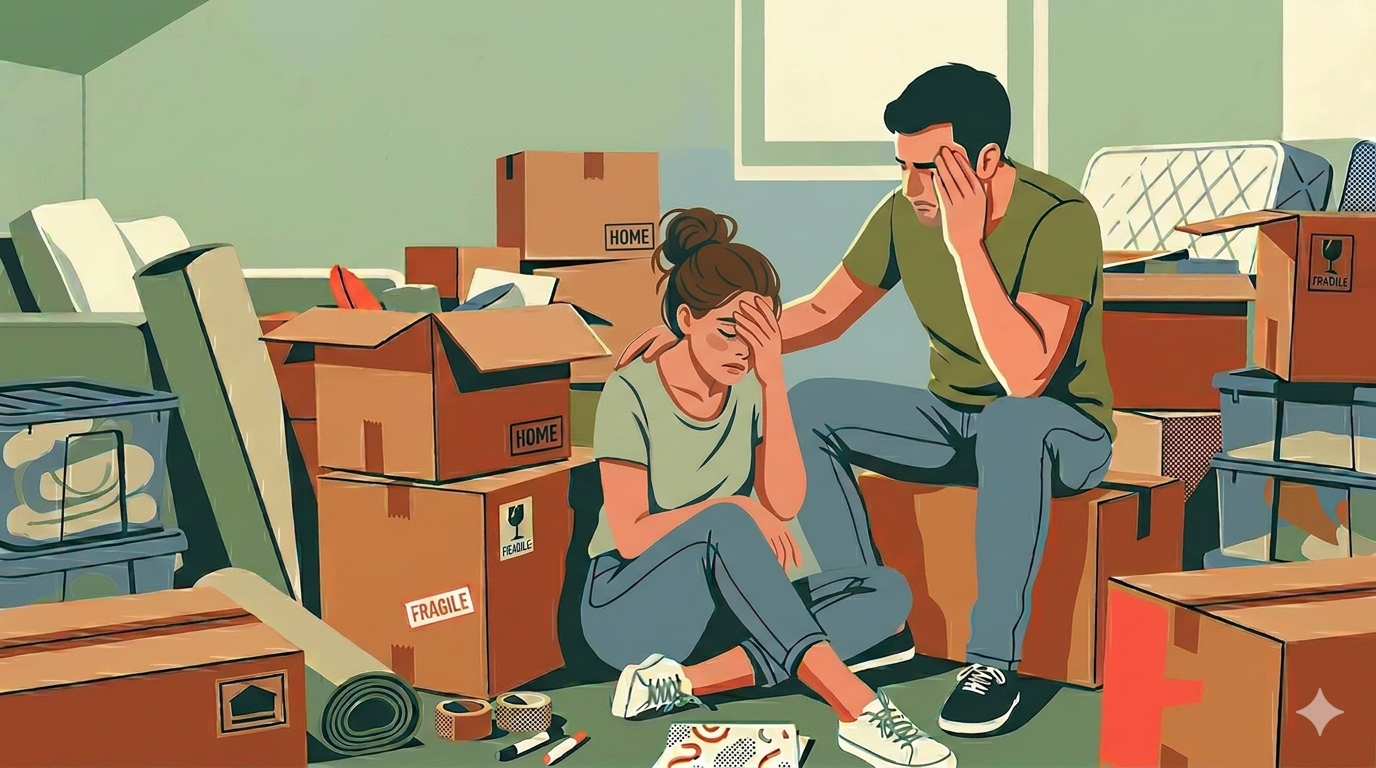
There’s a quiet assumption that if a couple decides to move abroad together, the relationship must be strong enough to handle it. And sometimes that’s true. But strength isn’t really the variable that gets tested. Change is. Relocation is considered a significant life stressor, not because something bad has happened, but because almost everything familiar disappears at once. Routines, support systems, and a sense of ease in everyday life. Even simple things start to require more effort. Individually, that’s already a lot to carry. In a relationship, it rarely stays individual.
Stress has a way of moving between people. It shows up in tone, in patience, in how quickly misunderstandings escalate. What might have been a small disagreement before can start to feel heavier, not because the issue itself has changed, but because the capacity to absorb it has. This is why many couples don’t struggle immediately after a move, but months later. The first phase is often driven by momentum, planning, organizing, and figuring things out. It’s when things slow down that the strain tends to surface. When the adrenaline drops, when everyday life settles in, and when one person may start to feel more at home while the other still doesn’t.
Research on relocation and expat couples consistently points to the first one to two years as the most vulnerable period for increased tension and disconnection. Not necessarily because relationships are failing, but because they are under a kind of pressure they haven’t experienced before. And that pressure is rarely equal. Even when both partners choose the move, they don’t experience it in the same way. One might find structure quickly, while the other is still trying to rebuild it. One feels challenged in a motivating way, the other feels disoriented. That difference doesn’t always lead to conflict, but it often leads to misinterpretation, one feeling distant, the other feeling misunderstood.
Another layer that complicates things is expectation. Moves like this are usually tied to opportunity, which makes it harder to acknowledge when it doesn’t feel entirely good. There’s a quiet pressure to adjust well, to appreciate the experience, to make it work. But emotional reality doesn’t follow decisions. You can want the move and still struggle in it. You can be committed to the relationship and still feel disconnected at times. When that gap isn’t acknowledged, it tends to show up indirectly, in irritation, withdrawal, or conversations that feel heavier than they should.
Relocation doesn’t create entirely new problems in a relationship, but it does change the environment enough that existing patterns become more visible. With less external support, there is greater reliance on one another. With less routine, there is more uncertainty. With less familiarity, there is more emotional effort. Over time, that adds up. This is also why the timing can feel confusing. The strain is often not immediate. It builds gradually, until something small triggers a reaction that feels disproportionate. From the outside, the relationship can look like it has changed. More often, it’s the conditions around it that have.
None of this means relocation leads to separation. Many couples adapt, recalibrate, and even grow stronger through it, not because they avoided difficulty, but because they understood what they were dealing with. The tension wasn’t random, that the distance had context, and that they weren’t failing, they were adjusting. If anything, relocation asks something very specific of a relationship: the ability to stay connected while navigating different internal experiences simultaneously. That’s not easy. But it is possible. And it usually starts with recognizing that what you’re experiencing, individually and together, makes more sense than it first appears.