
Grief Across Time Zones
By Teresa Cordeiro

May is Mental Health Awareness Month, and somehow writing about grief while living on the other side of the world feels painfully fitting.
There is a very particular kind of grief that comes with living abroad. The kind where your world stops, but everything around you keeps moving normally. The kind where you receive the worst phone call of your life and, instead of jumping in the car to get there, you start calculating flights, connections, passports, and over 24 hours of travel.
Last August, I lost my dad.
And hearing the words “You need to get on a plane, dad is not going to wake up.” still echoes inside my body.
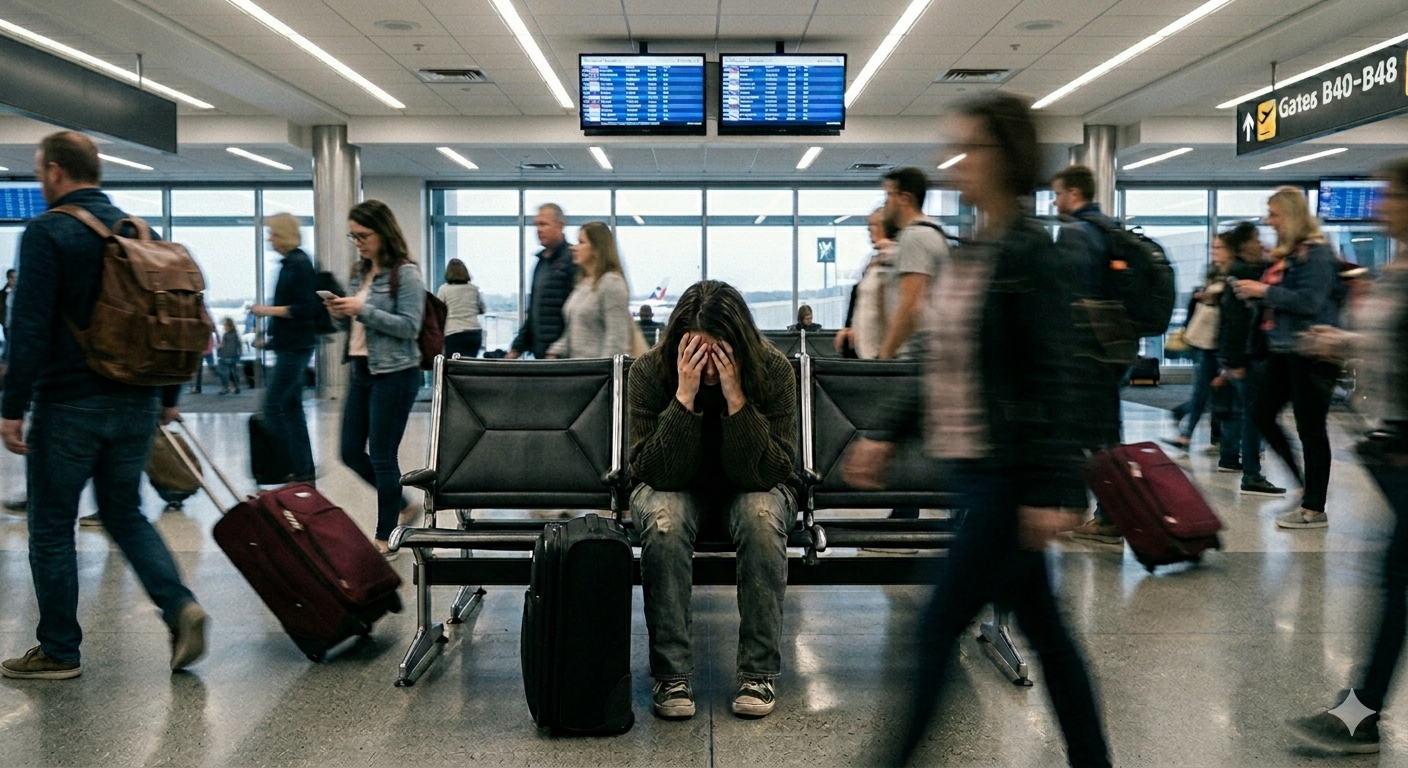
I do not think people fully understand the emotional shock of those moments. Your body goes into survival mode. You are packing bags while trying to process the possibility of losing someone you love. You are sitting in airports surrounded by strangers buying coffee and rushing to meetings, while your own world feels like it is collapsing. And somewhere between the exhaustion, the time zones, and the disbelief, your brain tries to protect you.
One thing I have noticed about grieving from far away is how confusing denial can feel. When you already live physically distant from someone you love, your brain is used to not seeing them every day. Used to missed calls, time differences, messages answered later, and long gaps between hugs.
So sometimes your mind plays tricks on you.
For a second, it feels like they are still there. Just busy. Just sleeping. Just not answering yet.
And then reality crashes back in all over again.
I also think grief abroad can feel strangely lonely, even when you have support around you. The people around you may care deeply, but they do not know your person. They did not grow up with them, hear their jokes, eat their food, or understand the role they played in their life and identity. And then, after the funeral, you often return to the country you live in and experience another wave of grief all over again. Because the rituals are suddenly over, everyone back home slowly returns to normal life, and you are left trying to continue functioning in a place that no longer feels quite the same.
Nobody really talks enough about the emotional complexity of grieving while living abroad. The guilt. The helplessness. The emotional whiplash of airports and funeral homes. The strange numbness. The brain fog. The anger. The moments where you genuinely forget for a split second, they are gone.
Psychologically, this makes sense. Grief is not linear, and denial is not weakness. Denial is often the brain’s way of protecting us from emotional overload when reality feels too painful to absorb all at once. And when physical distance was already part of the relationship, the mind can struggle even more to register permanence.
Grief already changes your sense of reality. Distance adds another layer to it.
If you are going through this too, I hope you know that you are not grieving wrong. There is no perfect way to navigate loss, especially while trying to hold yourself together far away from home.
Some days it may feel real.
Some days it may not.
Some days you may function normally and then completely fall apart because of a song, a voicemail, or a missed call you can no longer return.
All of it is human.
And if nobody has told you this yet: surviving grief from thousands of miles away requires a kind of emotional strength that is often invisible to everyone else.